

Are people visiting your website, but you’re not sure where they’re coming from — or why some visitors convert while others disappear?
That confusion is common. Many beginners focus on getting more traffic without understanding the different types of traffic first. When you don’t know the source, improving results becomes difficult.
Types of traffic shape visitor behavior. A search visitor behaves differently from a social visitor. A paid visitor thinks differently than a returning subscriber. Knowing the difference helps you create better pages, better offers, and smarter marketing decisions.
This guide explains the essential types of traffic in simple terms. You’ll learn how each source works, when to use it, and how different traffic types support growth.
Organic Traffic (Search Traffic)
Organic traffic comes from search engines when people find your content naturally. A user searches a question, sees your page, and clicks without you paying for placement.
This traffic often shows strong intent. The visitor actively looks for a solution, comparison, or explanation. That intent makes organic visitors valuable for blogs, tutorials, and product reviews.
Organic traffic usually grows slowly. Search rankings take time and consistent publishing. However, once a page ranks, visitors can arrive for months without extra cost.
Content depth, relevance, and structure influence organic performance. Pages that answer real questions clearly tend to attract steady search traffic.
For many websites, organic traffic becomes the foundation of long-term growth.
Paid Traffic (Advertising Traffic)
Paid traffic comes from ads placed on platforms like search engines, social networks, or display networks. Businesses pay to show content to a specific audience.
Paid traffic delivers speed. You can test offers, messaging, and landing pages quickly. That speed helps reduce guesswork.
However, paid traffic requires careful targeting. Poor targeting sends visitors who have little interest. That increases costs without improving results.
Paid visitors often need clearer messaging because they didn’t search for you directly. Strong headlines, simple pages, and focused calls to action improve performance.
Paid traffic works best when used for testing, scaling proven ideas, or launching new offers.
Social Media Traffic
Social traffic comes from platforms where people discover content while scrolling. Posts, reels, videos, comments, and profile links all drive visitors.
Unlike search traffic, social visitors may not have strong intent at first. They clicked because something caught attention. That makes storytelling and clarity important.
Consistency influences social traffic more than perfection. Regular posting builds familiarity. Familiarity increases clicks.
Different platforms also shape traffic quality. Short video platforms drive reach. Professional platforms drive thoughtful engagement. Visual platforms drive inspiration-based clicks.
Social traffic often supports awareness first and conversions later.
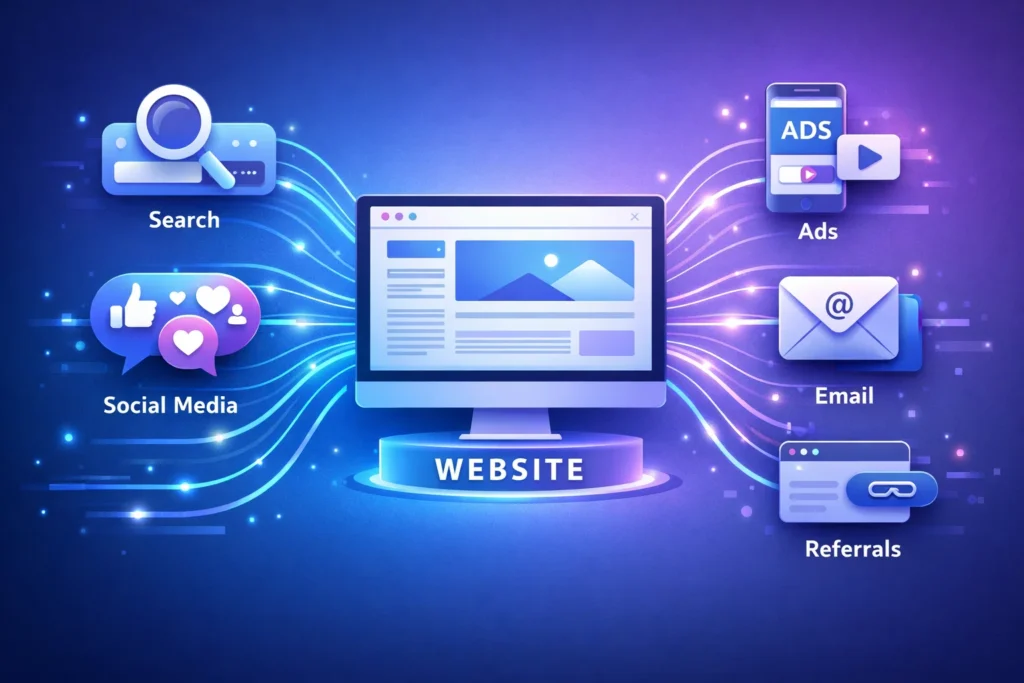
Direct Traffic
Direct traffic happens when someone types your website address, uses a bookmark, or returns through a saved link. This traffic often indicates brand recognition.
Direct visitors already know your name or content. That familiarity improves trust and engagement. Returning readers tend to spend more time on pages and explore deeper.
Direct traffic grows slowly as your content library expands. Email subscribers, repeat readers, and community members often create this traffic.
While beginners may not see much direct traffic initially, consistent publishing gradually builds this source.
Direct traffic reflects brand strength more than discovery.
Referral Traffic
Referral traffic comes from other websites that link to your content. These links may appear in guest posts, resource lists, reviews, or mentions.
Referral visitors can be highly relevant when the linking site shares your audience. A marketing blog linking to your review page sends visitors already interested in marketing tools.
Referral traffic also supports credibility. A mention from another site acts as social proof. Over time, these links help both traffic and search visibility.
Partnerships, collaborations, and helpful content increase referral opportunities. The focus should remain value-driven rather than promotional.
Referral traffic may be smaller in volume but strong in relevance.
Email Traffic
Email traffic comes from subscribers clicking links inside newsletters or updates. This traffic often performs better than new visitor traffic because trust already exists.
Subscribers joined voluntarily. That means they expect your content and recommendations. Familiarity shortens the decision process.
Email traffic also gives control. Social algorithms change, but email allows direct communication with your audience. That stability makes email valuable long term.
Email works especially well for:
- new article announcements
- product reviews
- tutorials and guides
- deal alerts
Even a small email list can drive consistent traffic.
Community and Platform Traffic
Community traffic comes from forums, groups, Q&A sites, and niche platforms. These spaces gather people around specific interests and problems.
Helpful participation often drives this traffic. Answering questions, sharing experiences, and linking relevant resources attract clicks naturally.
Community visitors tend to be focused. They already discuss the topic, so interest is high. This makes community traffic useful for early feedback and niche visibility.
However, direct promotion rarely works in communities. Value-first interaction builds trust and long-term traffic.
Over time, community participation can position you as a reliable resource.
How Different Types of Traffic Work Together
No single Types of Traffic carries a business alone. Growth usually comes from a mix. Each source plays a role in the visitor journey.
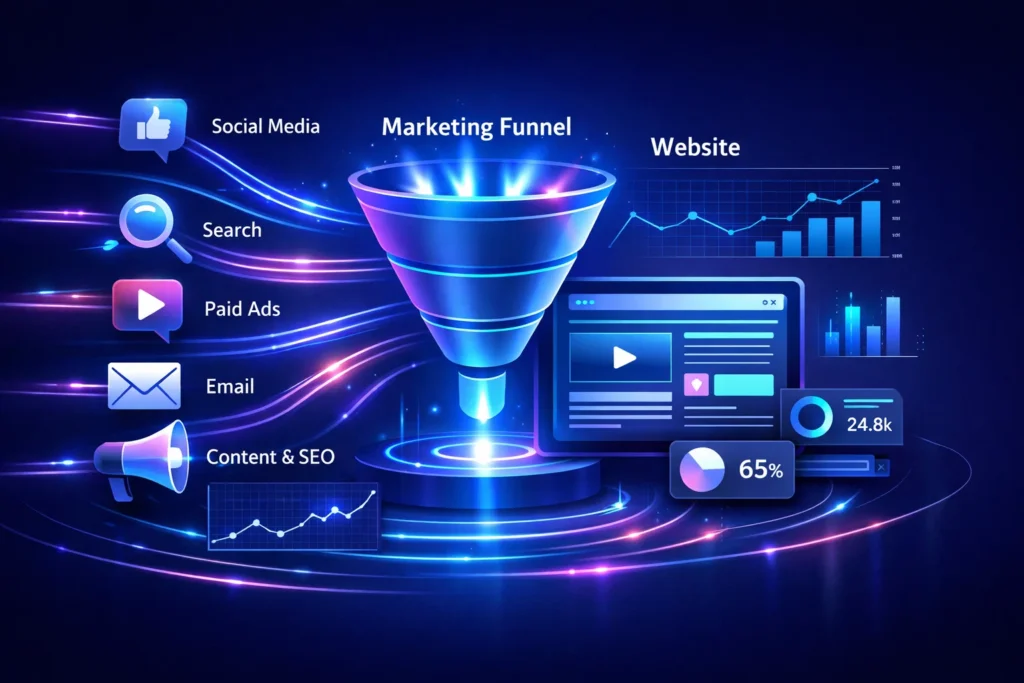
For example:
- Search traffic captures intent
- Social traffic creates awareness
- Email traffic drives repeat visits
- Referral traffic builds credibility
Balancing sources reduces dependency on one platform. This balance also stabilizes growth during algorithm changes.
Instead of chasing volume, focus on relevance across a few sources.
Common Mistakes When Choosing Traffic Sources
Many beginners choose traffic sources based on trends rather than fit. This often leads to frustration.
Common mistakes include:
- trying too many platforms at once
- ignoring search intent
- relying only on paid ads
- posting without a distribution plan
- neglecting email list building
Choosing fewer sources and staying consistent usually produces better results.
Conclusion
Understanding the types of traffic changes how you approach online marketing. Traffic stops being a random number and becomes a pattern you can influence.
Each traffic source brings visitors with different expectations. Matching content to those expectations improves engagement and conversion.
Start with one reliable source. Build consistency. Add another source when your workflow feels stable. Over time, multiple traffic types create steady and predictable growth.
FAQs
Which type of traffic converts best?
Search and email traffic often convert well because visitors show clear interest or existing trust.
Should beginners focus on one traffic source?
Yes. Starting with one main source helps build momentum before expanding.
Is paid traffic necessary?
Paid traffic is useful but not required early. Many businesses grow first through content and organic channels.
How long does traffic diversification take?
Traffic diversification happens gradually as content grows and new channels become manageable.

Akhtar Zaid specializes in traffic tools, lead generation systems, and online business programs. He evaluates offers based on long-term usefulness, learning curve, and value for money, not just flashy features.