

Have you been posting content for weeks, but traffic stays flat?
Or did you try ads once, watch the budget vanish, and feel frustrated?
Free vs Paid Traffic both come from the same gap: most people don’t truly understand what they’re actually costing. In the Free vs Paid Traffic debate, free traffic costs time and consistency, while paid traffic costs money, ongoing testing, and strong tracking discipline.
What Free Traffic Means
Free traffic is any traffic you don’t pay for directly per click or per view. Free traffic usually comes from:
- search engines (SEO)
- social media posts
- community participation
- referrals from other sites
- email clicks from your own list
Free traffic still has a cost. The cost shows up as time, skills, and patience. You earn free traffic by publishing content, building visibility, and improving trust.
Free traffic often starts slow. Free traffic also compounds when you build assets that keep getting visits.
What Paid Traffic Means
Paid traffic is traffic you buy through advertising platforms. You pay for impressions, clicks, or conversions. Common paid sources include:
- Google Ads (search and display)
- Meta ads (Facebook/Instagram)
- TikTok ads
- YouTube ads
- native ads and other networks
Paid traffic is fast. Paid traffic can also be expensive if your message, targeting, or landing page is weak. You’re paying to learn. If you don’t track results, you’re paying to guess.
The Core Difference: Time vs Money
Free traffic spends time to reduce cost. Paid traffic spends money to reduce time.
That sounds simple, but the trade-offs matter.
Free traffic can feel “safe” because no money leaves your pocket. Yet free traffic can waste months if you publish without a plan. Paid traffic can feel “risky” because money disappears fast. Yet paid traffic can save months by showing what works early.
A practical mindset helps here:
Free traffic builds assets. Paid traffic buys testing speed.
Free vs Paid Traffic: Side by Side Comparison
Here’s a clear side-by-side view.
| Factor | Free Traffic | Paid Traffic |
|---|---|---|
| Upfront cost | Time + effort | Money + setup |
| Speed of results | Slower at start | Fast |
| Control | Low to medium (platform rules) | Medium to high (budget + targeting) |
| Long-term value | Compounding asset | Stops when spend stops |
| Trust-building | Often stronger | Often weaker at first |
| Best for | Authority + stability | Testing + scaling |
| Biggest risk | Wasted time without direction | Wasted spend without tracking |
Speed: How Fast Each One Works (Realistic Examples)
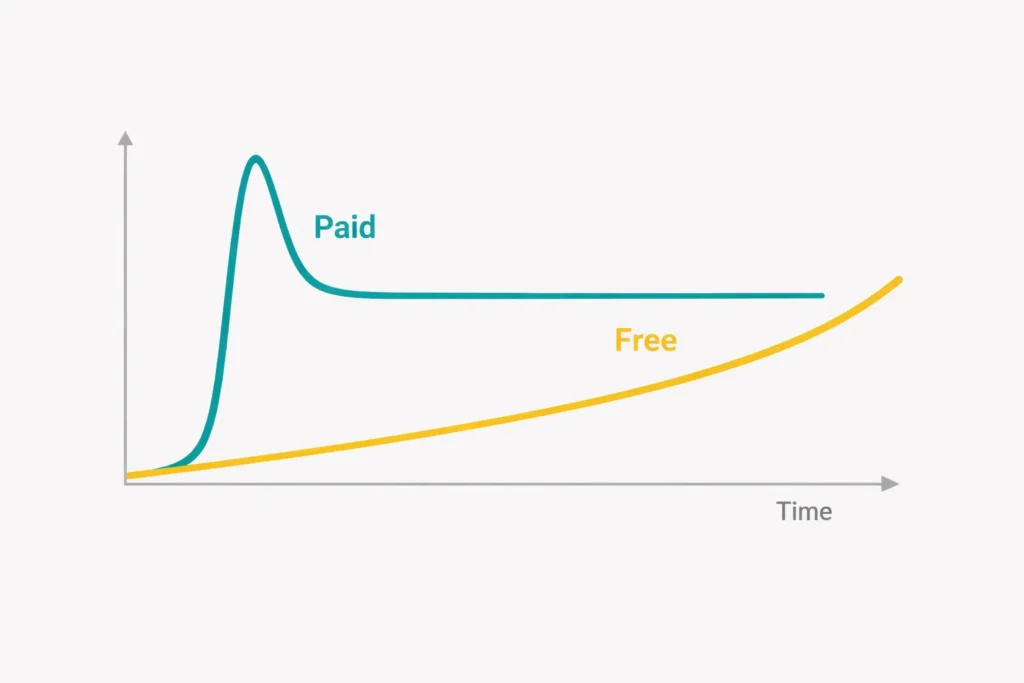
Speed is the reason many people choose paid traffic. But speed is also why paid traffic punishes weak setups.
Example of free traffic speed (realistic)
A new blog post may take time to reach stable traffic. A new social account may need consistent posting before reach grows. A new YouTube channel may need several uploads before the platform trusts it.
Free traffic improves as you build:
- more content
- better internal links
- better topical coverage
- better engagement signals
Example of paid traffic speed (realistic)
A paid campaign can produce clicks the same day. You can test:
- headlines
- offers
- angles
- audiences
If the page converts, you scale. If the page fails, you fix fast.
Paid traffic is a microscope. It shows problems quickly.
Intent: Why Free Traffic Often Converts Better
Many free traffic visitors arrive with intent. A search visitor is already looking for an answer. That visitor is closer to a decision.
Paid traffic is often interruption-based. A paid visitor may not be actively searching. The visitor clicks because something grabbed attention.
This difference changes how you write pages:
- Free traffic pages work well as guides, comparisons, and reviews.
- Paid traffic pages must be tighter and faster to understand.
Paid traffic can still convert well. But paid pages must match the audience’s stage and mindset.
Cost Example Table: What “Free” and “Paid” Look Like in Practice
This table uses simple, realistic planning numbers. These are not promises. These are examples to help you compare effort.
| Scenario | Typical “Cost” | What you get |
|---|---|---|
| Free traffic blog plan | 2–4 hours per article | A growing library of pages that can rank |
| Free social plan | 30–60 minutes per day | Gradual audience and repeat visitors |
| Paid traffic test | Small daily budget + tracking setup | Fast feedback on message and offer |
| Paid traffic scale | Higher spend + creative refresh | Predictable volume (if conversions hold) |
The main takeaway: free traffic needs consistent work. Paid traffic needs consistent measurement.
Quality: Not All Traffic Is Equal
Traffic quality depends on relevance. A visitor who matches your topic is more valuable than a random click.
Free traffic can be low quality when:
- you chase viral topics unrelated to your niche
- you publish broad content with unclear audience
- you don’t guide visitors to next steps
Paid traffic can be low quality when:
- targeting is too broad
- the ad promises one thing and the page delivers another
- you optimize for clicks instead of outcomes
Quality improves when you align:
ad → page → offer → next step
When Free Traffic Wins
Free traffic is strongest when you want stability and long-term growth. Free traffic also fits creators who don’t want ad risk yet.
Free traffic tends to win when you’re building:
- review content (buyer intent)
- evergreen guides (education intent)
- tutorials (how-to intent)
- comparison posts (decision intent)
- a brand that people trust over time
Free traffic also wins when your budget is tight. Time becomes your leverage.
Best free traffic channels for long-term compounding
- SEO content clusters
- YouTube videos that rank and get suggested
- Pinterest for evergreen click traffic (niche dependent)
- email list content loops (once list exists)
- partnerships and guest posts
When Paid Traffic Wins
Paid traffic is strongest when you need speed or you need predictable volume.
Paid traffic tends to win when you want:
- quick testing
- quick lead flow
- fast feedback on an offer
- retargeting of warm visitors
- scaling after you find a winning page
Paid traffic is also useful when you have a clear conversion event, like:
- opt-in
- checkout
- booking
- trial signup
If you don’t track a clear event, paid traffic becomes blind spend.
A Simple Decision Guide
Use this quick guide to decide where you should focus first.
Start with free traffic if:
- you’re new and still learning basics
- you don’t have budget for testing
- you can publish consistently
- you want long-term stability
Start with paid traffic if:
- you already have a strong offer and landing page
- you can track conversions correctly
- you can afford test budgets without panic
- you need fast validation
Most people do best with a blended approach. The mix depends on stage.
The Best Strategy for Most People: Build, Then Boost
A practical strategy is to build a base with free traffic and use paid traffic to accelerate what works.
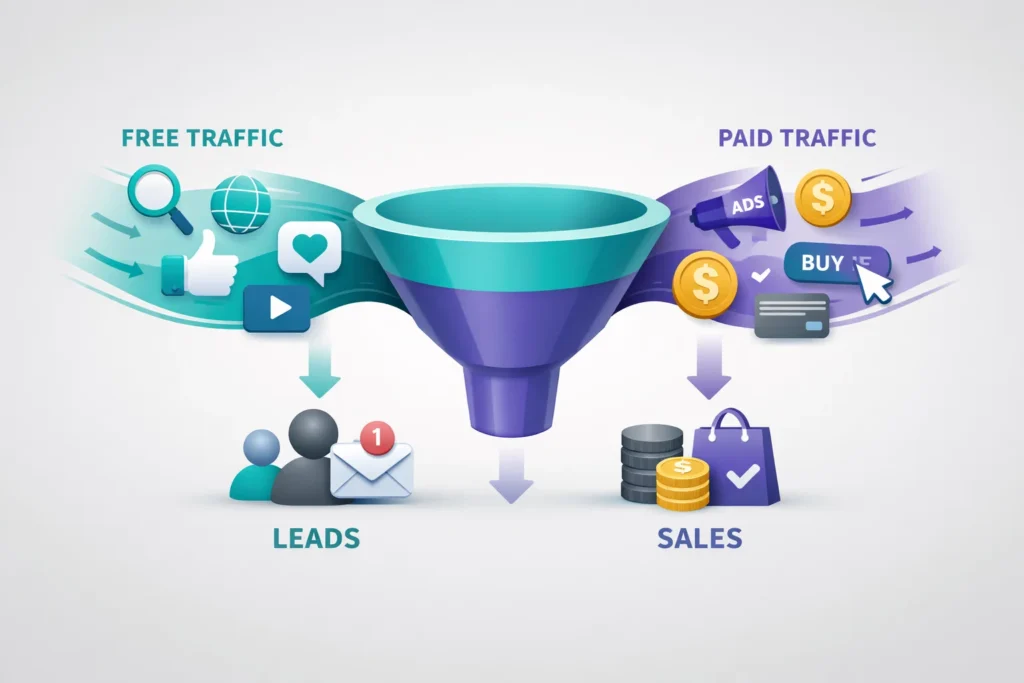
Here’s how that looks in real life:
- Publish useful content that targets real questions
- Add internal links that guide visitors deeper
- Capture leads (email) with a simple offer
- Identify pages that keep attention and get clicks
- Run small paid tests to promote your strongest page or lead magnet
- Retarget visitors who already engaged
That sequence reduces risk. You don’t pay for traffic to a weak foundation.
Common Mistakes With Free Traffic
This is where free traffic often fails.
- People publish without a clear topic plan
- People switch niches too often
- People don’t build internal links
- People quit before compounding begins
Free traffic rewards repetition. If you treat free traffic as “post and pray,” the results stay random.
Common Mistakes With Paid Traffic
Paid traffic fails fast when fundamentals are missing.
- People run ads without conversion tracking
- People send traffic to a homepage instead of a focused page
- People scale too early
- People test too many things at once
Paid traffic needs structure: one offer, one landing page goal, one clear metric.
Example: Free Traffic Path vs Paid Traffic Path
Here’s a simple, realistic comparison.
Free traffic path (typical)
A visitor searches for a problem. The visitor reads a guide. The visitor clicks a related post. The visitor subscribes. The visitor returns later and buys.
This path is slower, but it builds trust.
Paid traffic path (typical)
A visitor sees an ad. The visitor clicks. The visitor lands on a page. The visitor opts in or buys.
This path is faster, but it needs sharp messaging.
Both paths work. The best businesses often use both paths together.
A Practical “Starter Plan” You Can Follow
This section includes bullets (limited) to keep it easy to follow.
Week-by-week starter plan
- Publish 1 strong piece of content each week (SEO or social-first).
- Turn each post into 3–5 short social posts.
- Add one simple lead capture (newsletter or checklist).
- Track which pages keep attention and earn clicks.
- After a few weeks, run small paid tests to boost your best page.
This plan creates progress without needing complex systems.
How to Measure Success (Without Getting Lost)
Free vs paid traffic decisions become easier when you track a few key signals.
For free traffic, track:
- growth in visits to top pages
- search impressions and clicks (if using SEO)
- internal link clicks
- email signups from content
For paid traffic, track:
- cost per lead or cost per purchase
- landing page conversion rate
- click-through rate (as a signal, not the goal)
- retargeting performance
Paid traffic without tracking is gambling. Free traffic without measurement is guesswork.
Conclusion
Free vs paid traffic isn’t a battle. Free traffic builds long-term assets and trust. Paid traffic creates speed, testing power, and predictable volume.
Choose free traffic when you want stability and compounding growth. Choose paid traffic when you want faster feedback and controlled scaling. Combine both when you want the most reliable path.
If you keep the workflow simple and track outcomes, both traffic types can work together to grow your business steadily.
FAQs
Is free traffic really free?
Free traffic doesn’t cost money per click, but free traffic costs time, effort, and patience. Free traffic still has a real cost.
Which converts better: free traffic or paid traffic?
Free traffic often converts better because visitors arrive with intent. Paid traffic can convert well too, but paid pages need stronger alignment.
Should beginners run ads?
Beginners can run ads, but beginners should start small. A small test budget is safer than scaling too early.
How long does free traffic take to work?
Social traffic can grow in weeks with consistency. SEO traffic often takes longer, especially for new sites. Results vary by niche and competition.
What’s the best mix of free and paid traffic?
A common mix is building free traffic first and using paid traffic to boost winners and retarget warm visitors. The right mix depends on budget and goals.