

Many beginners post on social media, build websites, or run ads without understanding one key idea — traffic. Without traffic, even the best offer stays invisible. That confusion often leads to wasted time and money.
So what is traffic in online marketing, and why does everyone talk about it?
In simple terms, traffic means the people who visit your website, landing page, social profile, or funnel. Every click, visit, or view counts as traffic. More importantly, traffic represents attention — and attention drives leads, sales, and growth.
What Traffic Means in Online Marketing
Traffic in online marketing refers to the people who visit your digital spaces. These spaces include websites, landing pages, blogs, online stores, and social media profiles. Every visit represents attention, and attention is the starting point of all online growth.
When someone clicks a link, searches a topic, watches a video, or taps a post, they create a traffic event. That action shows interest, even if the visitor does not buy immediately. Marketers pay close attention to these signals because they reveal demand and behavior patterns.
Traffic is not just a number on a dashboard. The type of visitor matters more than the volume. A small group of people who care about your topic often brings better results than thousands of random visitors. Relevance drives conversions.
Different platforms generate traffic in different ways. Search engines send people who are actively looking for answers. Social platforms send people who are discovering ideas. Paid ads bring people through targeted exposure. Each source shapes visitor intent differently.
Understanding traffic helps you answer practical questions. Which content attracts visitors? Which pages lose attention? Which topics create curiosity? These insights allow you to refine your message instead of guessing.
Traffic also acts as feedback. If nobody visits a page, the problem may be visibility, messaging, or distribution. If many visitors leave quickly, the issue may be clarity or relevance. Observing traffic patterns turns marketing into a learning process.
For beginners, traffic often feels abstract. But thinking of traffic as “people entering your digital space” makes the concept clearer. Once people arrive, you can guide them toward deeper engagement — reading, subscribing, or purchasing.
In simple terms, traffic is the flow of attention toward your content. Everything else in online marketing builds on that flow.
Why Traffic Matters for Online Businesses
Traffic matters because online business needs visibility before anything else can work. A great product, a clean website, and strong content won’t help if nobody sees them. Traffic is the bridge between “building something” and “getting results.”
Traffic also creates data. Without visitors, you can’t tell what people like, what they ignore, or where they drop off. Even a small amount of steady traffic gives useful feedback. You start learning which headlines get clicks, which pages keep attention, and which offers feel confusing.
Another reason traffic matters is trust. Most people don’t buy on the first visit. They watch, compare, and return later. Traffic gives your brand repeated exposure. Repeated exposure builds familiarity, and familiarity lowers resistance. That’s why businesses with consistent traffic often convert better over time.
Traffic also supports list building. If you want email subscribers, webinar signups, demo requests, or WhatsApp leads, you need a flow of visitors. A lead is simply a visitor who takes a step deeper. Without traffic, lead generation becomes a waiting game.
For creators and affiliate marketers, traffic is often the main asset. Traffic to a review page, a comparison post, or a tutorial can produce income for months. This is why many marketers focus on traffic sources that compound, like SEO and evergreen content.
Traffic also reduces dependency. When a business relies on one platform only, a single algorithm change can hurt growth. Multiple traffic sources spread risk. This doesn’t mean you need to be everywhere. But building at least two steady sources gives stability.
It’s also easier to improve conversion when traffic exists. If you get 20 visits a month, small changes won’t show clear results. If you get 500 visits a month, you can test pages, improve copy, and see patterns. Traffic makes optimization possible.
A simple way to think about this: traffic is oxygen. You can build the body of a business, but traffic keeps it alive. Once you have steady traffic, improving sales becomes a realistic and repeatable process.
Types of Traffic You Should Know
Traffic is not one single thing. Visitors arrive with different mindsets depending on where they come from. When you understand traffic types, you can match the right content and the right offer to the right visitor.
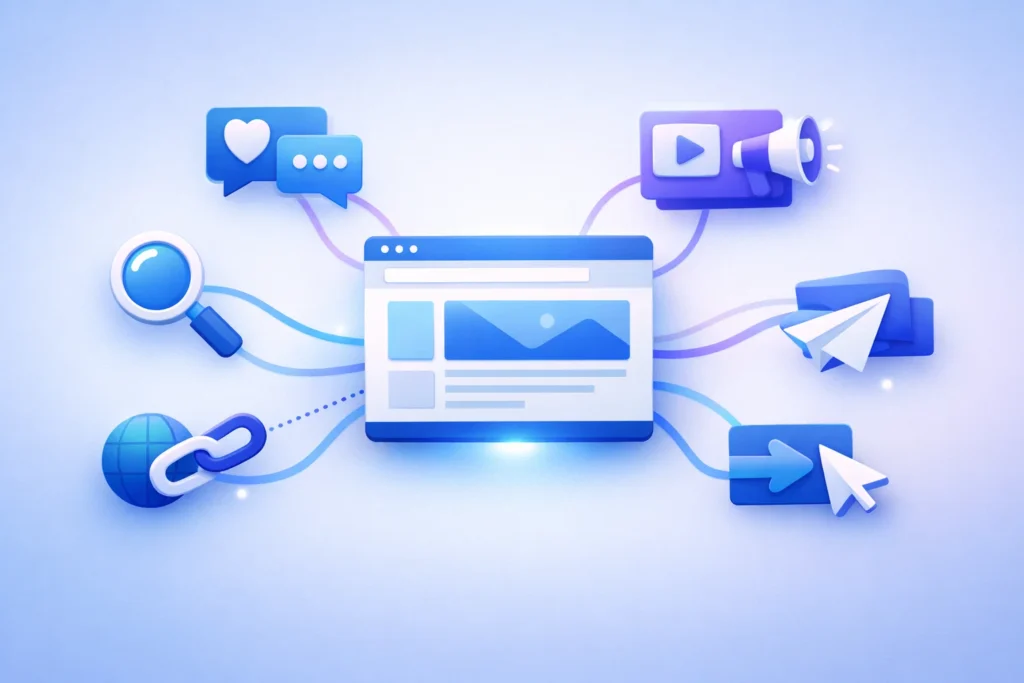
Organic traffic (search traffic)
Organic traffic comes from search engines like Google and Bing. A person types a question, sees your page, and clicks. This visitor usually has clear intent. They are searching for a solution, a guide, or a product review.
Organic traffic often takes time to build, but it can last a long time once it ranks. A single helpful article can bring visitors for months or even years. That’s why many websites treat SEO traffic as an asset.
Paid traffic (ad traffic)
Paid traffic comes from ads. You pay a platform to show your content to a targeted audience. This traffic can arrive quickly, but it requires careful control. If targeting is weak, paid traffic becomes expensive noise.
Paid visitors also behave differently. Many did not ask for your content. They saw it while scrolling. That means your first message must be strong, clear, and relevant. Paid traffic rewards good hooks and clean landing pages.
Social media traffic
Social Media traffic comes from platforms like Instagram, TikTok, Facebook, LinkedIn, X, and Pinterest. People click through from posts, videos, stories, comments, or your profile link.
Social traffic often depends on attention and timing. Trends can drive spikes. Consistency creates steady growth. Social visitors may be curious rather than ready to buy, so content that builds trust works well here.
Direct traffic
Direct traffic happens when someone types your website address, uses a bookmark, or clicks a saved link. This often suggests brand familiarity. Many direct visitors are returning readers.
Direct traffic is a good sign. It usually means people remember your site or your content. Over time, this traffic type supports higher conversion because the visitor already trusts you.
Referral traffic
Referral traffic comes from other websites that link to you. That might be a guest post, a mention in an article, a forum discussion, or a directory listing.
Referral visitors can be high quality if the linking website shares your audience. For example, a mention from a marketing blog can send visitors who care about marketing tools. That relevance makes referral traffic valuable.
Email traffic (often overlooked)
Email is not always shown as a “traffic type” in beginner lists, but email drives some of the best repeat visitors. If you send newsletters, product updates, or new post alerts, email clicks become strong traffic.
Email traffic performs well because subscribers already opted in. They know your name and expect your content. That familiarity often improves engagement and sales.
The key takeaway is simple: every traffic type has a different “visitor mood.” Search visitors look for answers. Social visitors discover ideas. Paid visitors need convincing quickly. Direct and email visitors already know you. When you understand that difference, you can write better pages and make smarter marketing choices.
Free vs Paid Traffic: Key Differences
Most people entering online marketing quickly face the same question: should you focus on free traffic or paid traffic? The answer is not one or the other. Both serve different roles, and understanding that difference helps you avoid frustration.
Free traffic comes from effort rather than ad spend. You create content, optimize pages, post on social media, or build an audience over time. This approach usually moves slower at the beginning, but it builds long-term assets. Once content ranks or gains traction, traffic can continue without additional cost.
Paid traffic works differently. You exchange money for visibility. Ads place your content in front of specific audiences almost immediately. This speed helps test ideas quickly, validate offers, and generate early data. However, paid traffic stops the moment you stop spending.
Free traffic rewards patience and consistency. It often builds trust more naturally because visitors discover your content while searching or exploring. Paid traffic rewards clarity. If your message, targeting, or landing page is weak, results drop fast.
Another difference lies in control. With paid traffic, you control timing, budget, and audience targeting. With free traffic, algorithms and search rankings influence visibility more heavily. This makes free traffic feel unpredictable at times, even though it compounds long term.
Many beginners rely only on one approach. That creates imbalance. Free-only strategies may grow slowly and feel discouraging. Paid-only strategies may become expensive without strong foundations. Combining both often creates stability.
A common pattern looks like this: use paid traffic to test messaging and offers, then build free traffic around what works. Over time, free traffic reduces dependency on ads while paid traffic accelerates growth when needed.
Budget also shapes the decision. Not everyone can run ads comfortably at the start. Free traffic provides an entry point without financial pressure. As skills improve and revenue appears, paid traffic becomes easier to justify.
The key is perspective. Free traffic builds assets. Paid traffic builds momentum. When you understand this relationship, you can choose the right approach for your stage instead of following trends blindly.
Where Traffic Comes From Today
Traffic comes from many places, but not every source fits every business. The best traffic sources match your audience, your content style, and your time budget. The goal is to pick a few sources you can repeat consistently, not chase every new platform.
Search engines
Search traffic remains one of the most reliable long-term sources. People use search engines when they want answers, comparisons, and solutions. That intent makes search visitors valuable for blogs, reviews, and guides.
Search traffic usually grows slowly. Rankings take time. But once a page performs well, traffic becomes steady and predictable. For review sites like ChampReview, search is especially powerful because people often search before buying.
Social platforms
Social platforms drive discovery. Many visitors don’t search for your topic directly. They find your content while scrolling. That makes social great for awareness, community building, and quick attention.
Different platforms also have different strengths. TikTok and Reels can create fast reach through short videos. LinkedIn can drive thoughtful engagement for business topics. Pinterest can send steady clicks for how-to content. The best platform depends on where your audience spends time.
Video platforms
Video creates trust faster than text. A short demo, walkthrough, or explanation can answer doubts quickly. Video traffic often performs well when you’re reviewing tools or explaining marketing concepts.
YouTube is a major traffic engine on its own. Shorts can boost reach, and long videos can rank in search. Even if you don’t want to be on camera, screen recordings and voiceovers still work.
Email lists
Email is one of the most underrated traffic sources because email traffic is repeatable. Once someone joins your list, you can bring that person back anytime with a new message.
Email works well for product reviews, deal alerts, and new content updates. It also helps you stay stable when social algorithms change. Email traffic often converts better because subscribers already trust you.
Communities and forums
Communities can drive targeted traffic when used properly. These include niche forums, Facebook groups, Reddit communities, and Q&A platforms.
The key is to participate first. Drop links only when helpful and allowed. Helpful answers build authority, and authority creates click-throughs. Community traffic may not be huge, but it can be highly relevant.
Partnerships and mentions
Referral traffic from other websites can be strong. Guest posts, collaborations, and tool roundups often send visitors who already care about your topic.
This traffic also builds credibility. A mention from a relevant site acts like a recommendation. Over time, these links can support both traffic and SEO.
Paid ads
Paid ads remain a major traffic source for people who want speed. Ads can send traffic to landing pages, email opt-ins, product pages, and content.
The best use of paid ads is often testing. Ads quickly show which angles work, which hooks fail, and which offers attract attention. Once you find what works, you can scale.
A useful approach is to choose two sources at first. One should be stable and compounding, like search or YouTube. The other can be faster and flexible, like social or paid ads. This keeps growth realistic and reduces dependency on a single channel.
How Traffic Turns Into Leads and Sales
Traffic is only the first step. Visitors arriving on a page doesn’t automatically mean leads or sales. The bridge between traffic and revenue is conversion, and conversion happens when your content guides people toward a clear next action.
A visitor becomes a lead when the visitor shares contact information or takes a step that shows real interest. That might mean joining an email list, booking a call, signing up for a webinar, or downloading a guide. A visitor becomes a buyer when the visitor trusts your offer enough to purchase.
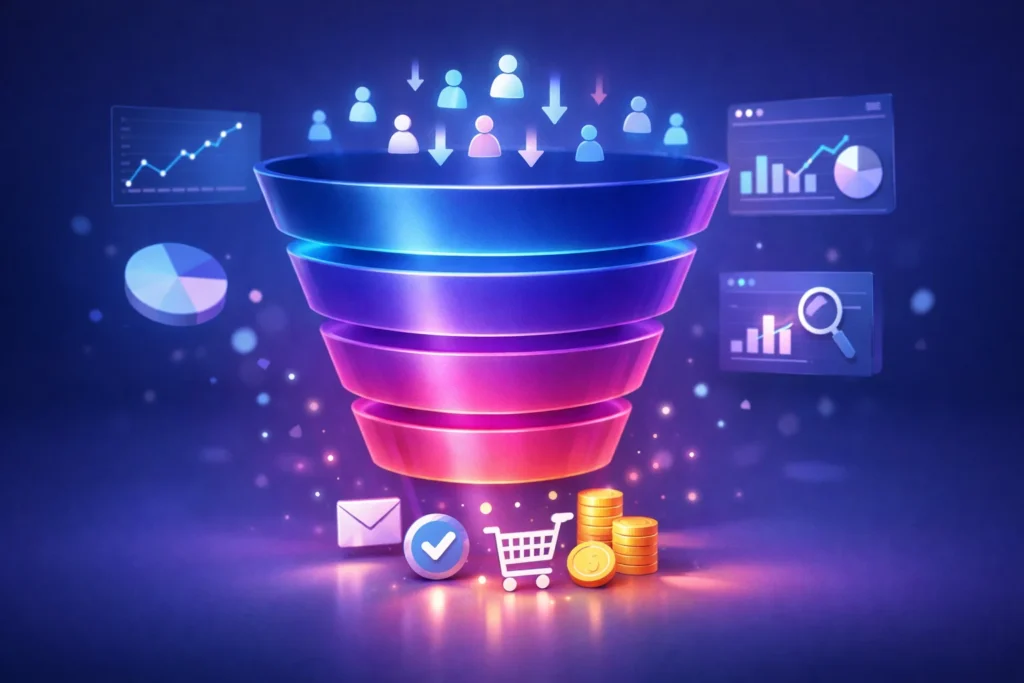
This process usually follows a simple path: attention → interest → action.
Match the page to the visitor’s intent
Traffic converts better when the landing page matches why the visitor clicked in the first place. A search visitor looking for “best email marketing tools” expects comparisons, features, and clear recommendations. A social visitor clicking a link may need more context and trust-building before taking action.
When intent and content align, visitors stay longer and move deeper. When intent and content clash, visitors leave fast.
Reduce friction
Many pages fail because the next step is unclear or too complicated. Visitors should understand the page within seconds. Headlines need to say what the page offers. Subheadings should guide scanning. Buttons should use simple language.
A good page doesn’t overwhelm. A good page focuses attention.
Build trust quickly
Most people hesitate before taking action online. Trust grows through clarity, proof, and transparency. This doesn’t require hype. It requires simple reassurance.
Trust signals may include:
- clear explanations and honest pros and cons
- screenshots or examples
- a visible contact option
- a short affiliate disclosure
- a straightforward bonus delivery explanation
Even small details can reduce doubt.
Capture leads before asking for a sale
For many niches, leads convert better than direct sales. A visitor may not buy today, but a subscriber may buy next week. Lead capture makes traffic more valuable because you can bring the visitor back.
That’s why many marketers use a lead magnet, free guide, checklist, or newsletter. Once someone opts in, follow-up emails build trust and explain offers with more context.
Use strong but natural calls to action
Calls to action matter because visitors need direction. A page can be helpful but still fail if the visitor doesn’t know what to do next. CTAs should feel like the natural next step, not a push.
Examples:
- “Read the full review”
- “See pricing and features”
- “Get the free checklist”
- “Compare the top tools”
Simple language works best.
Remember: conversion is a system
One post rarely carries the whole journey. Traffic turns into sales through repeated exposure. A visitor may read one guide, then a review, then an FAQ page, then return later and buy. Internal links help this flow because they guide visitors through the right information in the right order.
So traffic becomes valuable when you build a path. That path can be simple, but it must be intentional.
Tools That Help Manage and Grow Traffic
Traffic growth becomes easier when your workflow stays organized. Tools help you plan content, track performance, and understand what brings visitors. The goal isn’t collecting software. The goal is creating a system you can repeat every week.

Below are the main tool categories that support traffic growth. You don’t need all of them at once. Start with what solves your biggest bottleneck.
Analytics and tracking tools
Traffic without measurement turns into guessing. Analytics tools show where visitors come from and what visitors do after arriving. You can see which pages perform well, where visitors drop off, and which sources send the best traffic.
Look for metrics like:
- top pages by visits
- time on page and bounce patterns
- traffic source breakdown
- clicks to important buttons or links
Even basic tracking helps you improve content with confidence.
Keyword and topic research tools
Search traffic grows when you publish content people already look for. Keyword tools help you identify those topics, understand competition, and map content clusters.
You don’t need complex data at the beginning. Focus on practical questions and buyer intent terms. Review sites benefit from keywords like “review,” “pricing,” “vs,” “best,” and “alternative,” because visitors search those before purchasing.
SEO tools
SEO tools help you improve pages so search engines can understand them. These tools often help with:
- on-page checks (headings, titles, internal links)
- site health issues (broken links, missing metadata)
- performance and indexing visibility
SEO tools are most useful when you publish frequently and want a clean structure.
Social scheduling and publishing tools
Social platforms can send steady traffic when you post consistently. Scheduling tools help you maintain rhythm, especially when you manage more than one platform.
These tools also support content recycling. Evergreen posts can be re-shared without repeating the same captions. This keeps traffic steady and reduces the pressure to create new posts daily.
Link tracking tools
If you promote content across many platforms, link tracking helps you see what works. Tracking links show which posts drive clicks. They also help you test headlines and calls to action.
For affiliate sites, link tracking also keeps your outbound links organized. That reduces mistakes and makes updates easier.
Landing page and funnel tools
Traffic becomes more valuable when you capture leads. Landing page tools help you build opt-in pages, simple funnels, and thank-you pages.
Even a basic opt-in funnel can turn casual visitors into email subscribers. Once you have subscribers, traffic becomes easier to convert because you can follow up.
A simple starter setup often looks like this:
- one analytics tool to measure traffic
- one keyword tool or method to choose topics
- one publishing tool to stay consistent
As traffic grows, you can add tools for deeper optimization. But don’t start with complexity. Start with consistency and measurement.
Common Traffic Mistakes Beginners Make
Most traffic problems don’t come from a lack of effort. They come from effort pointed in the wrong direction. Many beginners work hard, post often, and still see little movement because a few mistakes quietly block growth.
Here are the most common ones.
Chasing every platform
A beginner posts on Instagram today, tries YouTube next week, then switches to Twitter, then starts a blog, then buys ads. The result is scattered effort and no momentum.
One platform, done consistently for a few months, usually beats five platforms done randomly. Choose a channel that fits your content style and audience. Build a routine. Expand later.
Focusing on volume instead of relevance
High traffic numbers look good, but irrelevant traffic rarely converts. A random visitor won’t join your list or buy your recommendations.
Relevance starts with the topic. A page should match what the visitor wants. A clear niche helps too. When your site focuses on a specific area, search engines and people understand the value faster.
Publishing without a clear goal
Some posts aim for awareness, others aim for leads, and others aim for sales. Problems happen when a post has no clear purpose. The visitor reads and then leaves because there’s no next step.
Each piece of content should answer one question and guide one action. That action can be simple, like reading a related guide or joining a newsletter.
Ignoring analytics
Many beginners publish content and never check what happens next. Without analytics, the same mistakes repeat. You don’t know which pages attract visitors, which headlines work, or where people drop off.
Even basic analytics can reveal patterns quickly. When you see what performs, you can publish more of that style and improve weak areas.
Expecting instant results
Traffic often grows slowly at first. Search rankings take time. Social accounts need repetition. YouTube channels need multiple uploads before momentum builds.
This delay is normal. Many people quit too early. A better approach is to set a weekly output goal and track progress monthly, not daily.
Over-automation and low effort content
Automation is useful, but content still needs a human touch. Low effort posts, repeated captions, and generic advice don’t earn attention. People scroll past content that feels copied.
Better traffic comes from clear examples, practical tips, and honest opinions. That kind of content stands out and gets shared.
How to Start Getting Traffic Today
Getting traffic doesn’t require a complicated strategy. A simple plan, done consistently, beats a perfect plan that never happens. The goal is to create a steady flow of visitors, then improve quality and conversion over time.
Here’s a practical way to start.
Step 1: Pick one primary channel
Choose one channel where you can show up weekly without burnout. For many beginners, that’s a blog (SEO), YouTube, or one social platform like Instagram or LinkedIn.
Pick based on your strengths:
- If you like writing, start with blog content and SEO.
- If you like speaking or demos, start with video.
- If you like quick content, start with short posts or reels.
The channel matters less than consistency.
Step 2: Choose one clear topic angle
Traffic comes faster when your content stays focused. Pick a topic area and stick to it. For ChampReview, that might be marketing tools, traffic tools, funnel tools, or online business programs.
A tight focus helps in two ways. People understand your brand faster. Search engines also understand your site faster.
Step 3: Create content that solves a specific problem
Visitors click when a headline matches a real need. Instead of broad topics like “marketing tips,” write content that answers clear questions.
Examples of problem-focused topics:
- “How to write better ad hooks”
- “Best tools for scheduling Instagram posts”
- “How to get leads from a landing page”
- “Tool X review: who should buy and who should skip”
Specific topics attract more targeted traffic.
Step 4: Add basic internal links
When you publish a post, link to two related pieces of content. This keeps visitors on your site longer and helps search engines map your site structure.
A simple internal linking habit builds authority over time.
Step 5: Share content in one repeatable way
Don’t overcomplicate promotion. Choose one repeatable sharing method. That might mean:
- posting a short summary on social
- sending an email to subscribers
- sharing in a relevant community (where allowed)
Traffic often comes from repetition more than clever tricks.
Step 6: Track one or two key metrics
You don’t need advanced dashboards at the start. Track only what helps you improve.
Useful beginner metrics include:
- visits to your top pages
- clicks to your key links or buttons
- which traffic source grows month to month
Once you see patterns, you’ll know what to publish next.
Traffic grows when you treat marketing like a routine. Publish, measure, improve, repeat. The early stage feels slow, but momentum builds when you keep the system simple and steady.
Final Thoughts
Traffic sits at the foundation of online marketing. Every strategy depends on people discovering your content first.
Understanding traffic helps you make smarter decisions about platforms, tools, and content priorities. Instead of guessing, you begin to see patterns and opportunities.
Start small. Focus on consistency. Let data guide adjustments.
As traffic grows, the rest of your marketing becomes easier to improve.
FAQs
What is traffic in online marketing in simple terms?
Traffic means the people who visit your website, funnel, or social content. Each visit represents attention and potential opportunity.
Which type of traffic is best for beginners?
Organic and social traffic work well for beginners because they require more time than money. Paid traffic can help later with testing.
How long does it take to build traffic?
Timelines vary. Consistent content often shows results within a few months, while SEO traffic can take longer to grow.
Can you get traffic without ads?
Yes. Content marketing, SEO, social media, and partnerships can generate traffic without paid campaigns.

Zahid Ali focuses on reviewing AI tools, marketing software, and funnel systems. His reviews break down real-world use cases, setup difficulty, pricing structures, and who each product is best suited for.